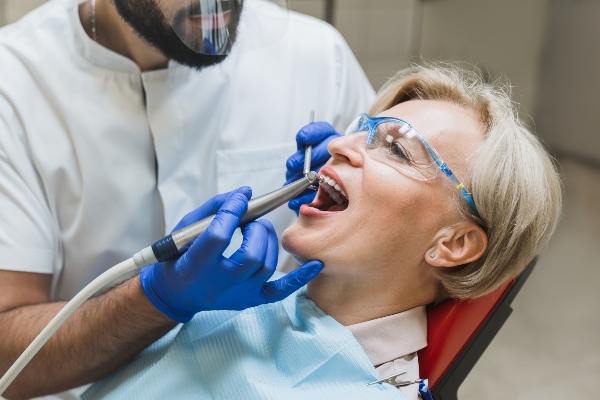
 You may qualify for a semi-invasive gum disease treatment after a thorough assessment. These approaches will need dental sedation to make them painless. These treatments aim to stop the progression of periodontitis. Here are a few semi-intrusive gum disease treatment options you must consider.
Pinhole surgical technique (PST)
This gum disease treatment is also called pinhole gum surgery. A person with advanced periodontitis develops gum recession. This condition happens when the gum tissue pulls away from the teeth. Traditional gum graft surgery involves taking a piece of healthy tissue and then placing it over the exposed tooth.
PST is a quick gum disease treatment that does not need a long recovery. The dentist will make a tiny hole to loosen the gum tissue with the help of another tool. Repositioning the gum tissue will come next. The dentist will make sure that the tissue covers more of the tooth’s surface. The patient can have many teeth covered in one dental visit.
This less-intrusive gum disease treatment reduces one’s risk of infection. The absence of incising and stitching makes this possible. There will be a small level of discomfort. But the improvement in one’s smile will be quick and dramatic.
Laser-assisted new attachment procedure (LANAP)
Research shows that LANAP is one of the most recent innovations in laser gum surgery. Back in 2004, the US FDA cleared it for treating periodontitis. This gum disease treatment uses a laser. It directs UV light to the damaged parts of the gums. The smart laser targets infected tissue and leaves the healthy ones alone.
LANAP kills bad bacteria in the deep periodontal pockets surrounding the teeth, closing the gap. It also stimulates the creation of new connective tissue. LANAP then encourages the reattachment of gums to the teeth and the normal growth of gum tissue. This semi-invasive gum disease treatment will have proper sedation. Every dental visit will take about two hours.
Studies reveal that this gum disease treatment can reverse the effects of periodontitis. It can then help the patient fully heal. This treatment can help regenerate bone tissue. Most patients qualify for this treatment.
Scaling and root planing
Research shows that gum inflammation leads to gum recession. The gum tissue pulls away from the teeth, forming gum pockets. The pockets may become too deep for regular dental cleanings to clear. This is when the dentist will recommend scaling and root planing or deep cleaning.
Scaling removes the plaque and tartar buildup underneath the gumline. The dentist uses a tool that reaches the very bottom of the gum pocket to remove bacteria. Root planing smoothens the dental roots after scaling. This gum disease treatment helps prevent the future buildup of bacteria. It also helps the gum tissue reattach to the teeth.
Semi-invasive gum disease treatments win the fight against gum disease
A full assessment from your dentist will determine if you are a good candidate for a semi-invasive gum disease treatment. The dentist will ensure that the treatment you get will be painless. The goal of each therapy is to end periodontitis. Working with your dentist can help free your mouth from infection.
Request an appointment or call Rivermark Dental at 408-648-4788 for an appointment in our Santa Clara office.
Related Posts
A successful gum disease treatment is important for your oral health. Restoring the health of gums and teeth needs the right procedure and maintenance. It also needs mindfulness after the appointment. Understanding what you must do to support your gum disease treatment results can help prevent complications.Keeping an eye on one’s oral care habits is…
Maintaining oral health after gum disease treatment supports healing and helps reduce the chances of recurring again in the future. Adopting a consistent oral hygiene routine is one of the most effective ways to promote gum health and protect the improvements made during treatment. With a few tips from a general dentist, making a habit…
Your general dentist will choose the right gum disease treatment for your situation. A full assessment will determine if you need surgical or non-surgical solutions. Understanding the processes is a good way to prepare for your appointment. Here is a comprehensive guide to your possible gum disease treatment.Studies show that most patients prefer a non-surgical…